
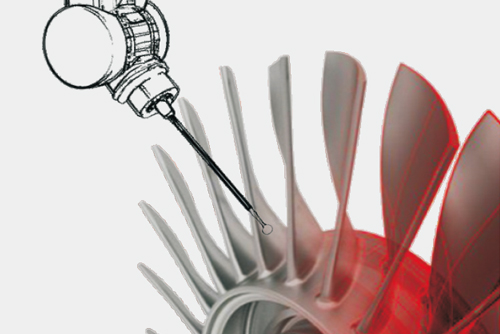
Based on the collaborative innovation of high-precision hardware and intelligent software, CMM gear measurement technology has become increasingly prominent in high-end manufacturing, building core competitiveness distinct from traditional dedicated measuring instruments, which is embodied in four major dimensions.
Controllable precision and full-parameter coverage constitute its core technical barrier. It achieves micron and even sub-micron level measurement accuracy. For instance, high-end models from ZEISS feature multi-sensor fusion technology, delivering 3D measurement accuracy down to 0.3 μm, and can accurately capture more than 20 key parameters including profile, pitch, and helix deviations. Through full-field data acquisition, it eliminates the risk of missed detection inherent in traditional sampling inspection, with errors strictly controlled within the tolerance ranges specified by authoritative industrial standards. Whether for measuring the positional tolerances of spiral bevel gears on PGMMT systems or inspecting center distances in heavy-duty gearboxes with ZEISS equipment, quantifiable data is provided to support quality control.
Scenario adaptability and flexible operation break the limitations of dedicated equipment, covering more than 95% of mainstream gear types such as involute cylindrical gears, bevel gears, and worms. It satisfies inspection demands for both small precision gears and large gearboxes weighing several tons. The flexible switching between non-contact scanning and contact probing enables non-destructive measurement of fragile workpieces like ceramic gears and hot-machined parts, while also accessing internal grooves, tooth groove bottoms, and other areas difficult to reach with conventional methods. This makes it suitable for complex working conditions across aerospace, new energy vehicles, and other industries.
The balanced optimization of cost and efficiency has reshaped the inspection landscape. Enterprises no longer need to invest millions in dedicated gear measuring centers; by upgrading existing CMMs (e.g., with high-precision rotary tables), multi-purpose measurement can be realized. The upfront investment is only one-fifth that of dedicated machines, and operation and maintenance costs are reduced by 60%–70%. Meanwhile, functions such as automatic path planning and rapid multi-view data stitching in intelligent software drastically shorten measurement cycles. As an example, ZEISS rotary table upgrade solutions can boost measurement efficiency by over 50%, significantly cutting enterprises’ time and labor costs.
Digitization and full-lifecycle empowerment align with Industry 4.0 requirements. Measurement data can be imported in real time for comparison with CAD models, generating deviation heatmaps and standardized inspection reports to provide data support for process optimization. Selected high-end solutions also offer value-added functions including meshing simulation and noise analysis, allowing prediction of gear transmission performance, vibration, and noise issues. This enables full-lifecycle control from production inspection to performance optimization, supporting enterprises in establishing a digital quality system.



Scan WeChat
Enjoy one-to-one consultation


